Old European Cut vs Modern Round Diamonds: Which Suits Your Style?
Old European Cut vs Modern Round Diamonds: Which Suits Your Style?
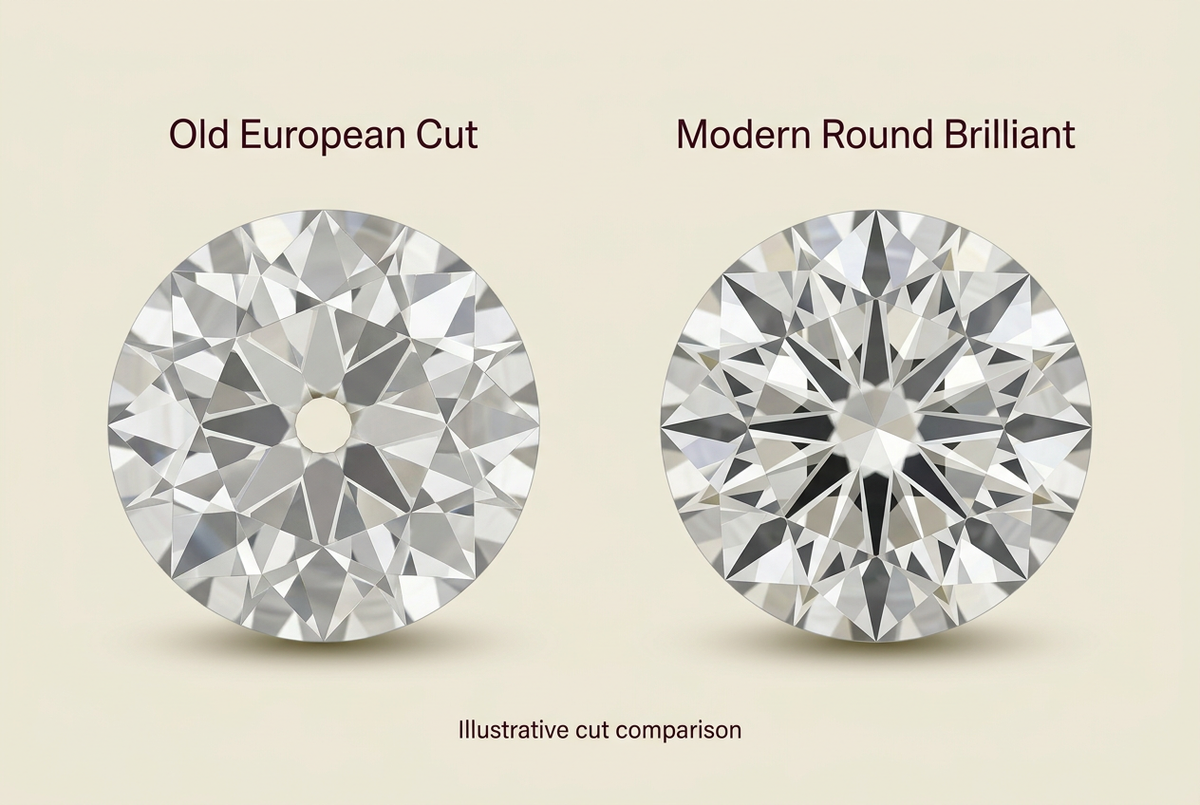
Put an old European cut diamond next to a modern round brilliant and you'll see the difference in about a second. One sparkles like a camera flash. The other glows like candlelight.
Neither is the better diamond. They are made for different tastes, and knowing which one is yours is half the pleasure of choosing.
Two eras, two ideas of beauty
A modern round brilliant is designed with mathematics. Its angles and proportions are calculated to return as much white light as possible, and the result is crisp, bright and sharply defined.
An old European cut comes from a time before that, when stones were shaped by hand and judged by eye. Cutters worked with the light available to them, which was often gas lamp or candle, and they cut for warmth and depth rather than precision.
You can see that in the stone:
- A high crown. The top of the diamond sits tall, which gives it presence.
- A small table. The flat top facet is much smaller than on a modern cut.
- A large open culet. A tiny flat or open facet at the base can be seen face up as a small window.
- Chunky, broad facets. They produce larger, softer flashes of light instead of fine, fast sparkle.
Because every one was cut by hand, no two are quite alike. Slight asymmetries are part of the character.
How they look different
A modern round brilliant is bright, white and energetic. It sparkles from across the room, and it suits clean, contemporary designs.
An old European cut is softer, deeper and more romantic. The light moves across it more slowly. It tends to draw people in rather than announce itself, and it suits antique-inspired settings, vintage restorations and anyone who wants a ring that doesn't look like everyone else's.
Which one suits you?
An old European cut may be for you if you:
- love vintage jewellery, period details and things with a story
- prefer a gentle glow to maximum sparkle
- want something that few other people will have
- like the idea of wearing a stone that has already lived a long life
A modern round brilliant may suit you better if you:
- want the brightest, most energetic sparkle available
- prefer a clean, contemporary look
- would like consistent, predictable proportions from stone to stone
Many people also find they simply know when they see it. Look at both in person if you can, ideally in daylight, and notice which one you keep coming back to.
A note on provenance
The old European cut diamonds we sell were hand cut at least 80 years ago and salvaged from old estate jewellery in Antwerp. They aren't reproductions or "vintage-style" modern stones. They are genuine antique diamonds that have been worn, loved and handed down, and they are now ready for a new setting and a new story.
Because they are recycled stones, choosing one also means no new diamond has to be mined for your piece. For many of our customers, that matters as much as the look.
A few practical things to think about
- Settings. The high crown and open culet suit settings that protect the stone, such as bezels and well-made claw settings. A good jeweller will know how to work with an old cut.
- Size. Old European cuts often look a little smaller face up than a modern round of the same weight, because more of the weight sits deep in the stone. Look at the diameter as well as the carat weight.
- Every stone is different. Compare individual diamonds rather than just specifications. Two old cuts with the same numbers can look quite different.
The simple answer
If you want brilliance, choose a modern round. If you want character, warmth and a stone with a past, choose an old European cut.
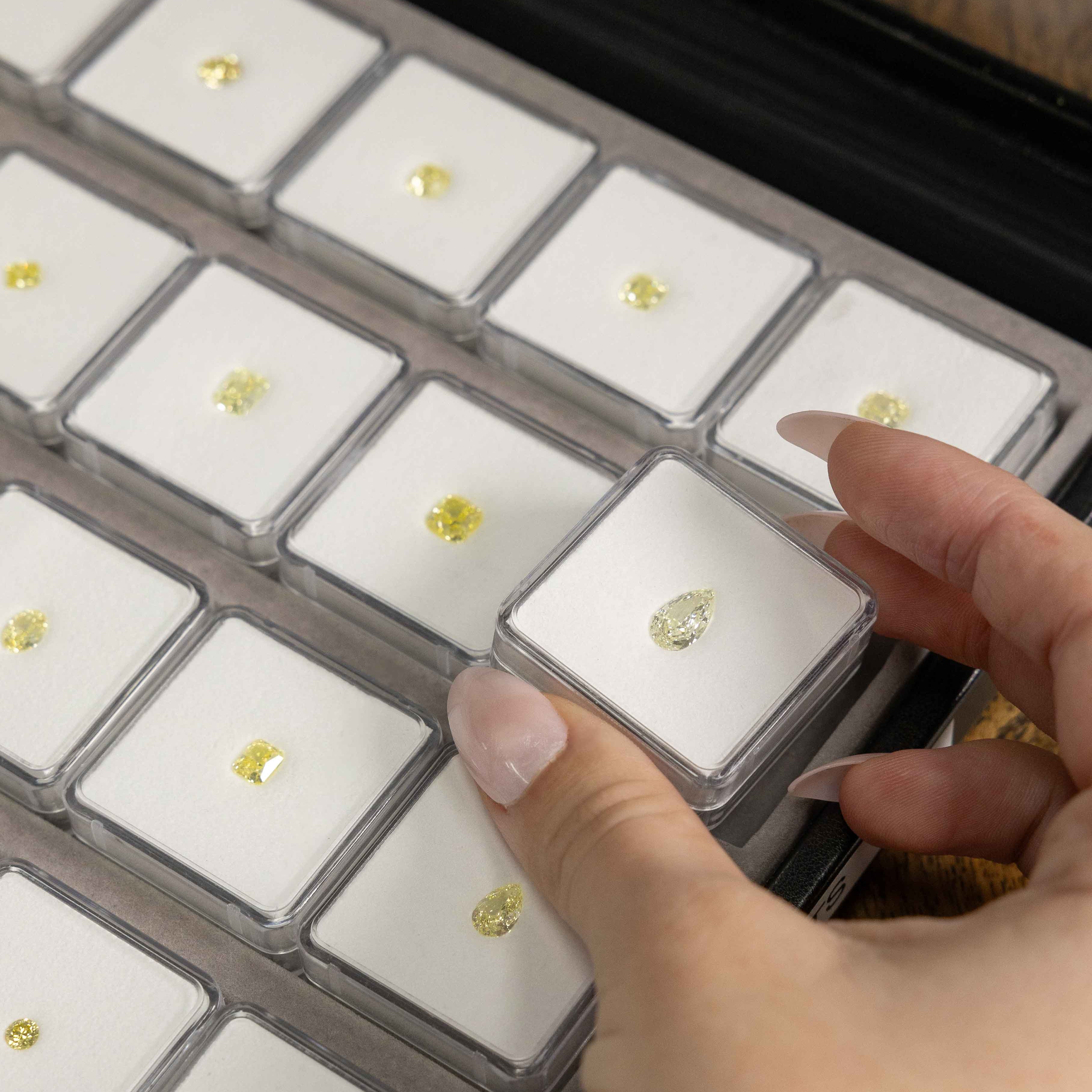
We have a selection of antique old European and old mine cut diamonds in stock, all loose and ready for your jeweller. Visit us in Perth or get in touch for Australia-wide delivery, and we'll help you find the one that suits your style.