
A Guide to Stone Shapes: The Official Names (and What People Actually Call Them)
A Guide to Stone Shapes: The Official Names (and What People Actually Call Them)
If you've ever browsed loose diamonds or gemstones and felt like you needed a glossary just to understand the shapes on offer, you're not alone. The gem world has a habit of naming things in a way that makes perfect sense once you know it — and very little sense before you do.
A pear shape is, helpfully, shaped like a pear. A cushion cut looks like a soft, rounded pillow. But other names are less obvious unless someone explains them, and most people end up describing the shape they're picturing rather than the official term for it.
We've put together this guide to bridge that gap — the official name for each shape, alongside the more descriptive, everyday way people tend to talk about it. Whether you already know exactly what you're looking for, or you're picturing a shape in your head and aren't sure what it's called, this should help you find it.
Round Brilliant — "The Classic Circle"
The most popular shape in the world, and for good reason. A round brilliant is cut with precise, symmetrical facets — usually 57 or 58 of them — designed specifically to maximise sparkle and light return. This highly defined style refers to a stone with exactly 57 or 58 facets, more than almost any other shape, which is why round stones tend to have the most fire and brilliance of all.
It's timeless, it's versatile, and it suits almost any setting — which is exactly why it remains the most requested shape, year after year.
Oval — "The Elongated Circle"
Take a round brilliant and stretch it gently in one direction, and you have an oval. Oval is one of the elongated diamond shapes that create the illusion of longer, slimmer fingers while still carrying much of the same brilliance as a round stone.
Ovals tend to look larger than a round stone of the same carat weight, which is part of why they've become such a popular choice for those wanting visual impact without the cost of additional carats.
Pear — "The Teardrop Shape"
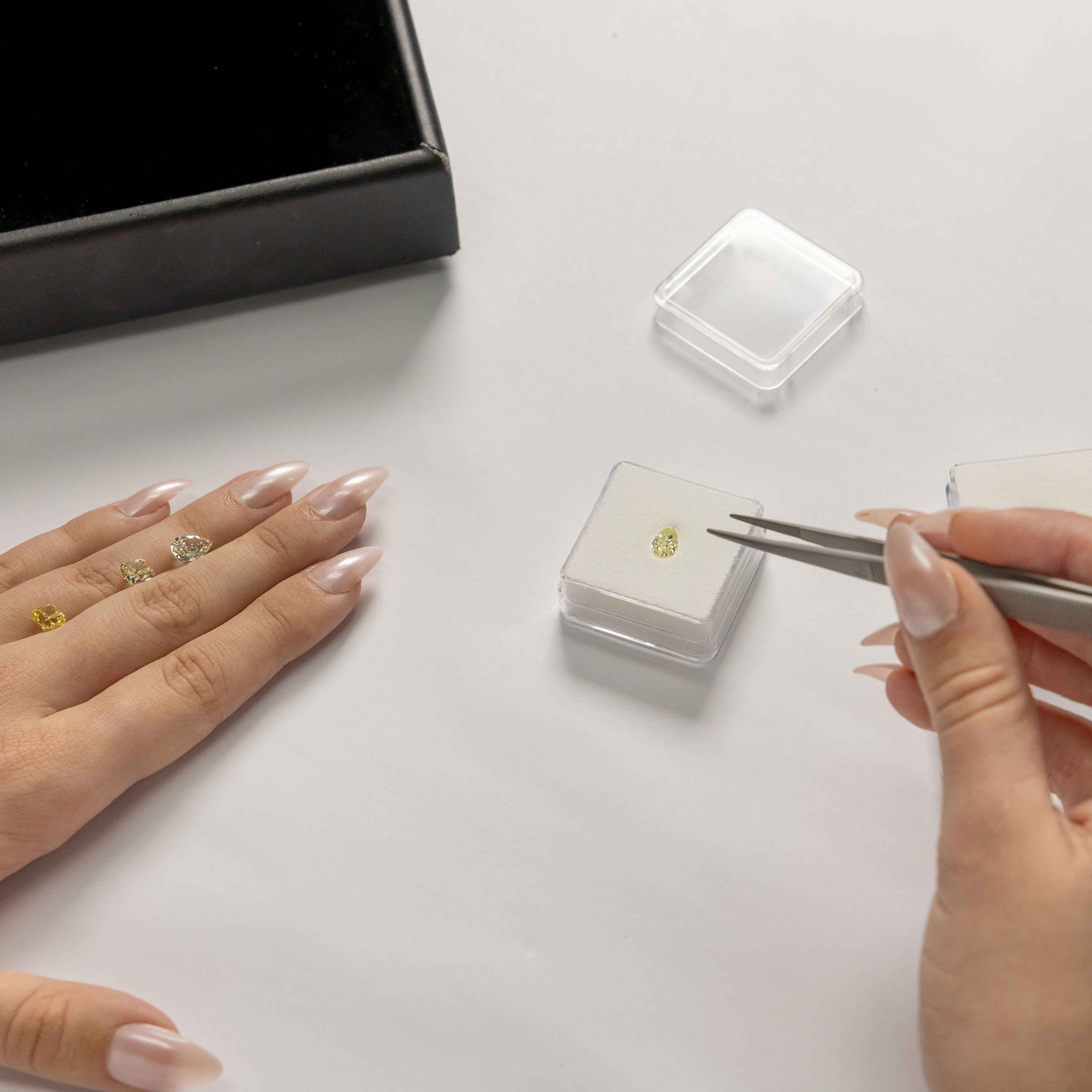
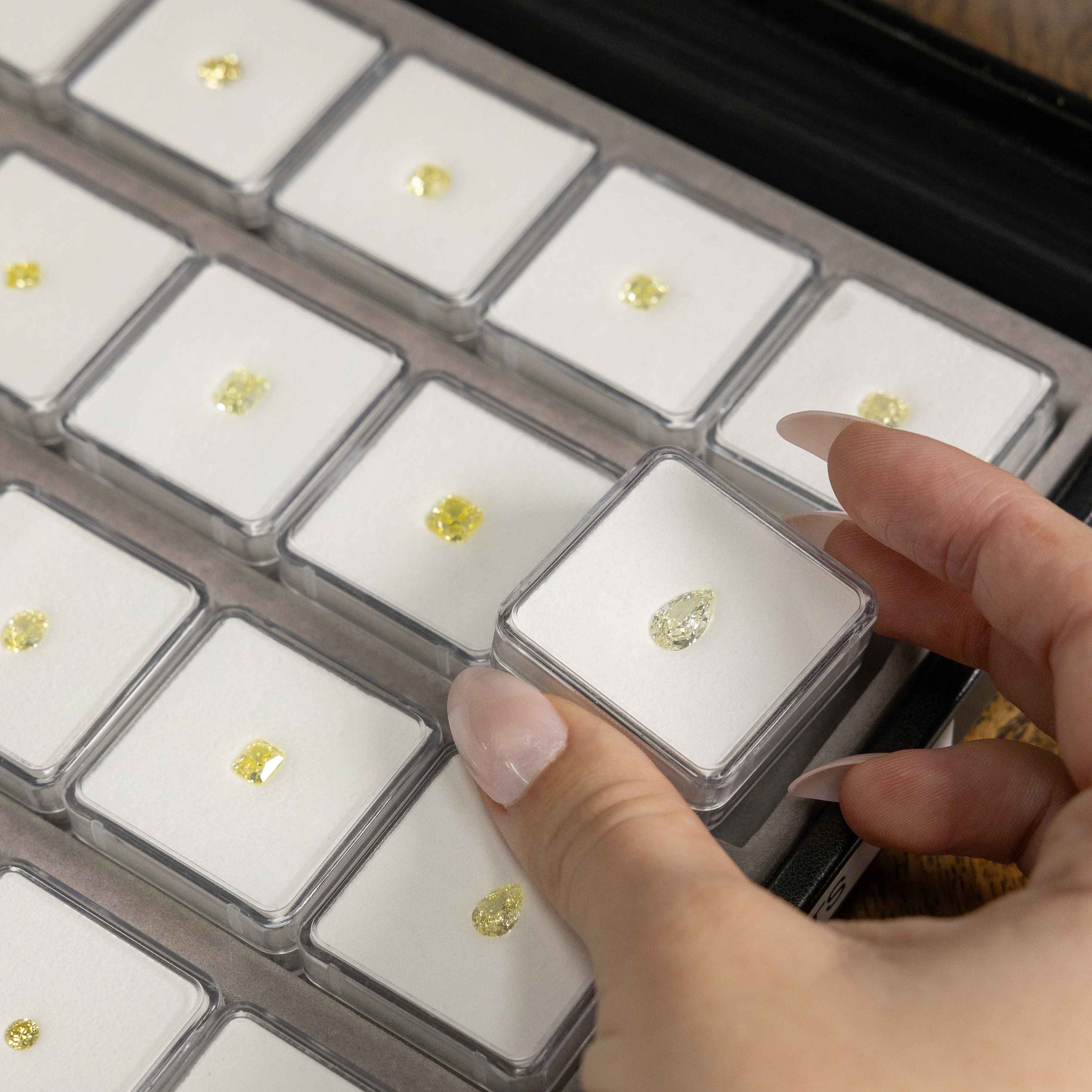
This is the one most people already describe correctly without realising it has an official name at all. The pear shape is traditionally cut with 58 facets and is widely known simply as the teardrop shape — rounded at one end, tapering to a point at the other.
Part of its appeal lies in its versatility, since it can be worn with the point facing up or facing down, offering two distinctly different looks from a single stone. It's also one of the more flattering shapes for an elongating effect on the finger, similar to an oval or marquise.
Cushion — "The Pillow Shape"
A cushion cut is square or rectangular in outline with softly rounded corners — hence the name, and hence why people often call it the pillow shape when they're trying to describe it without the jargon. The gently rounded corners of a cushion cut help maximise the brilliance and lustre of the gem, giving it a softer, more romantic look than a sharper-edged shape.
Despite feeling like a contemporary choice, the cushion shape is actually based on the old mine cut and was one of the most beloved shapes of the 19th century, only experiencing its modern revival in recent decades. If you love a vintage aesthetic, this is very often the shape behind it.
Emerald Cut — "The Rectangle with Cut Corners"
Despite the name, an emerald cut isn't a gemstone — it's a shape, originally developed for cutting emeralds (whose natural crystal structure suited a rectangular cut with trimmed corners) and later adopted widely for diamonds and other gemstones.
It's a step cut, meaning the facets are arranged in flat, parallel lines rather than the triangular facets of a brilliant cut. This gives an emerald cut a more understated, glassy elegance — less sparkle, more clarity and presence. People often describe it simply as the rectangle with the cut corners, or the art deco shape, since it's closely associated with that design era.
Asscher Cut — "The Square Emerald Cut"
Introduced in 1902 by diamond cutter Joseph Asscher, the Asscher cut features cropped corners similar to those of the emerald cut — the key difference being that an Asscher is square rather than rectangular. Its larger step facets and smaller crown give it more brilliance than a true emerald cut, and it's strongly associated with Art Deco jewellery.
If you're picturing a square version of an emerald cut, you're picturing an Asscher — and that's exactly how most people end up describing it before they learn the name.
Radiant Cut — "The Sparkly Rectangle"
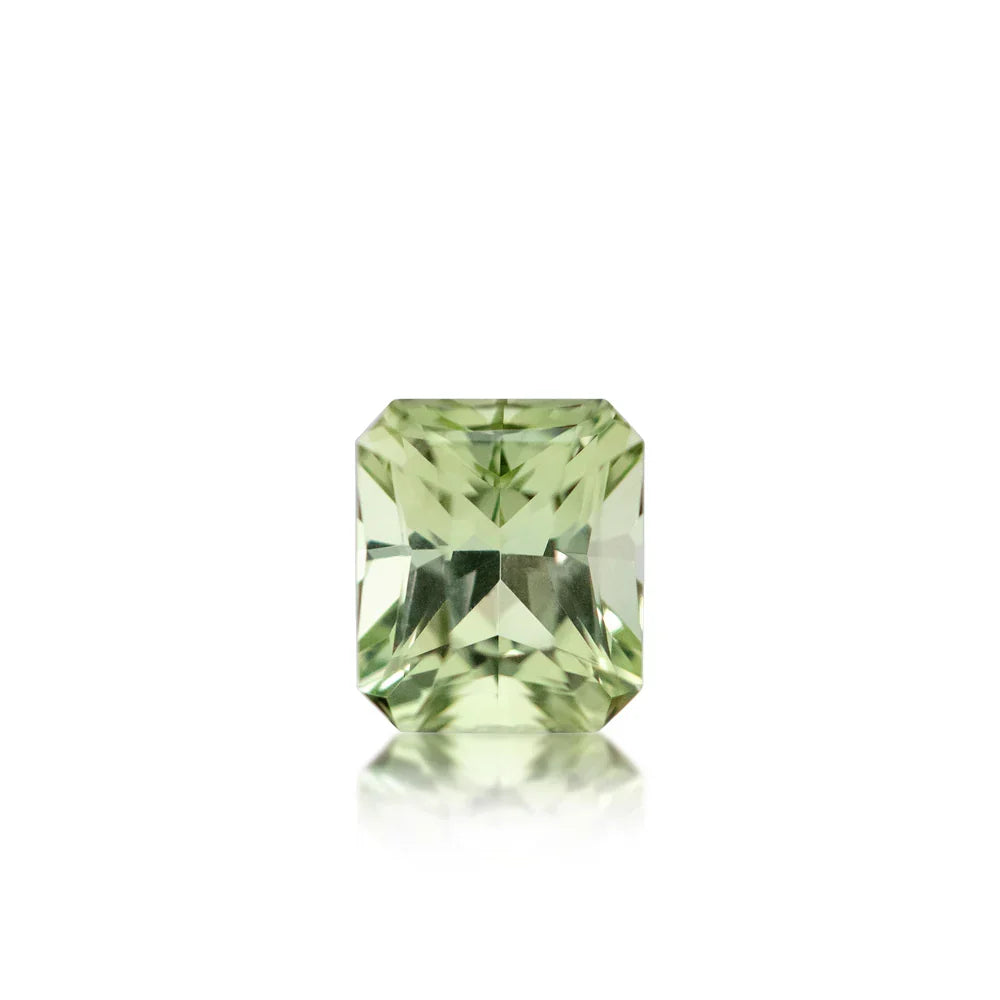
Designed by Henry Grossbard in the late 1970s, the radiant cut combines the elegance of the emerald cut with the sparkle of a round brilliant — essentially taking the rectangular outline people love and giving it significantly more fire than a traditional step cut.
Cut with around 70 precise facets, a radiant delivers a striking, all-over sparkle, and people frequently describe it as the rectangle that actually sparkles, distinguishing it from the quieter emerald cut.
Princess Cut — "The Square Sparkler"
A princess cut is square in outline with sharp, defined corners rather than the rounded softness of a cushion. Often labelled by the GIA as a square or rectangular modified brilliant, it's prized for its clean, contemporary lines and its flexibility across almost any ring style.
It's the shape most people are picturing when they describe wanting "a square diamond that sparkles a lot" — which is, genuinely, the simplest possible description of a princess cut.
Marquise — "The Football Shape" / "The Eye Shape"
Long, narrow, and pointed at both ends, a marquise has a football-shaped outline and is typically cut with around 57 facets. People also commonly describe it as eye-shaped, since the narrow, pointed silhouette resembles the outline of an eye.
Combining the elongating effect of an oval with the pointed drama of a pear, a marquise is an underrated shape that makes a genuine statement — and, like the pear, it tends to look larger than its actual carat weight would suggest.
Heart — "Exactly What It Sounds Like"
No translation needed here. A heart shape is typically cut with 56 to 58 facets and remains one of the most overtly romantic and symbolic shapes in the gem world — fitting, given Hope's own philosophy on what a stone can mean.
Trillion / Trilliant — "The Triangle Shape"
A trillion (sometimes called a trilliant) is a triangular cut, typically featuring anywhere from 31 to 50 facets depending on the specific style. It's a striking, modern shape most often used as a side stone or accent, though it can also work beautifully as a centre stone for someone wanting something distinctly different.
Cabochon — "The Smooth Dome"
This one breaks the mould entirely, because a cabochon isn't faceted at all. Cabochons are shaped and polished into smooth domes rather than cut with facets, and they're typically used for gemstones with strong visual phenomena on the surface — things like the cat's eye effect or a star pattern.
While usually circular or oval, cabochons can also be cut into square or rectangular domed shapes. If a stone has a shifting band of light across it or a star-like pattern, there's a good chance it's been cut as a cabochon specifically to showcase that effect.
Briolette — "The Faceted Teardrop"
Easily confused with a pear shape, but distinct in one key way. A briolette is a pear-shaped stone faceted on all sides, a style tracing back to the 12th century and historically associated with royalty, often seen in vintage earrings and pendants.
It's sometimes described as resembling a fully rounded pear, or even a double rose cut, since the faceting wraps continuously around the stone rather than sitting flat on a front face the way most other cuts do.
## Rose Cut — "The Vintage Dome"
One of the oldest cutting styles still in use, a rose cut has a flat base and a low, domed top covered in small triangular facets — giving it a soft, antique glow rather than the bright fire of a modern brilliant cut. Though it gives noticeably less fire and brilliance than a modern cut, the rose cut has made a strong comeback in recent years thanks to its distinctly vintage appeal.
If you've ever seen an antique ring with a stone that glows softly rather than sparkles sharply, that's very likely a rose cut.
---
A Quick Reference Table
| Official Name | What People Call It |
|---|---|
| Round brilliant | The classic circle |
| Oval | The stretched circle |
| Pear | The teardrop shape |
| Cushion | The pillow shape |
| Emerald cut | The rectangle with cut corners |
| Asscher cut | The square emerald cut |
| Radiant cut | The sparkly rectangle |
| Princess cut | The square sparkler |
| Marquise | The football shape / the eye shape |
| Heart | The heart shape |
| Trillion / Trilliant | The triangle shape |
| Cabochon | The smooth dome |
| Briolette | The faceted teardrop |
| Rose cut | The vintage dome |
---
Why This Matters When You're Buying
Knowing the official name helps when you're reading a certificate, talking to a jeweller, or searching with precision. But knowing the descriptive version matters just as much — it's how most people actually picture what they want before they know the vocabulary for it.
At Hope, we'd rather you describe the stone you're picturing in whatever words come naturally, official or not. Tell us you want "the teardrop one" or "the one that looks like a pillow," and we'll know exactly what you mean. That's the whole point — buying a loose stone should feel like a conversation, not a vocabulary test.
Read more
Understanding Australia's most coveted treasures The Argyle mine has closed forever, making its champagne diamonds among the world's rarest gemstones. These Australian treasures, with their warm ho...
Ask most people to name a coloured gemstone, and they'll reach for the obvious answers — emerald, ruby, sapphire. Ask a gemmologist the same question, and there's a good chance tourmaline comes up ...