



The Argyle Story: Why the World's Most Celebrated Diamond Mine Fell Silent
The Argyle Story: Why the World's Most Celebrated Diamond Mine Fell Silent
For thirty-seven years, a remote stretch of the East Kimberley in Western Australia produced more coloured diamonds than anywhere else on earth. Then, on 3 November 2020, the last load of ore came up from the Argyle mine, and an era that shaped the global diamond trade quietly came to a close.
For collectors and buyers of Australian fancy colour diamonds, understanding why Argyle closed — and what that closure actually means for supply today — isn't just a piece of mining trivia. It's the context behind every certificate, every price tag, and every stone still moving through the market.
The rise of a singular mine
Commissioned in 1983 in the East Kimberley region, the Argyle mine became, almost immediately, one of the largest diamond producers in the world by volume. At its peak it was yielding tens of millions of carats a year. But its real legacy wasn't scale — it was rarity. Argyle was responsible for around 90% of the world's pink diamonds, along with the majority of the market's fancy red, purplish-pink, champagne and cognac stones. No other mine, before or since, has produced pink diamonds in anything close to comparable numbers.
Why did Argyle actually close?
The story often gets simplified to "the mine ran out of diamonds," but the reality is more layered. A few forces converged at once:
Ore depletion. After nearly four decades of continuous extraction, the economically viable ore body had been worked through. Argyle moved from open-pit to underground mining in its later years as surface reserves thinned, but even that extension had a natural endpoint.
Rising operational costs. Underground mining at depth is significantly more expensive than open-pit extraction. As the easily accessible ore disappeared, the cost of reaching what remained rose steadily, while the proportion of gem-quality output kept falling.
A shrinking yield of fine stones. The overwhelming majority of everything Argyle ever produced was industrial-grade or small commercial goods. The vivid pinks and reds that made the mine famous were always a tiny fraction of total output, and that fraction only grew smaller in the mine's final years.
Planned closure, not collapse. Rio Tinto had signalled the closure years in advance, giving the market time to prepare. The end, when it came, was orderly: a formal closing ceremony, a six-month "make safe" period, and a rehabilitation program for the site expected to run for five years and beyond, undertaken in partnership with Traditional Owners of the land.
The impact on supply — and on price
Argyle's closure didn't just end one mine's production. It removed a source responsible for roughly 11% of the world's annual rough diamond supply, and close to 90% of its pink diamonds, from the market permanently. There is no comparable deposit anywhere else in the world, and none is expected.
The market began pricing this in well before the final blast. In the years leading up to closure, prices for the rarest tender-grade pinks and reds were already climbing sharply year on year, as buyers understood that each annual tender brought the finite total closer to zero. Since 2020, that trajectory has continued. Analysts and dealers tracking the category have reported sustained price growth across nearly every colour tier — from museum-grade vivid pinks through to the more accessible champagne and cognac stones that made Argyle a household name well beyond the top end of the market.
What makes this dynamic different from ordinary luxury goods inflation is simple: supply cannot respond to demand. A designer house can produce more of a popular style. A vineyard can plant more vines. Argyle cannot mine another carat. Every stone that exists today is the entire remaining inventory, permanently.
What this means if you're buying today
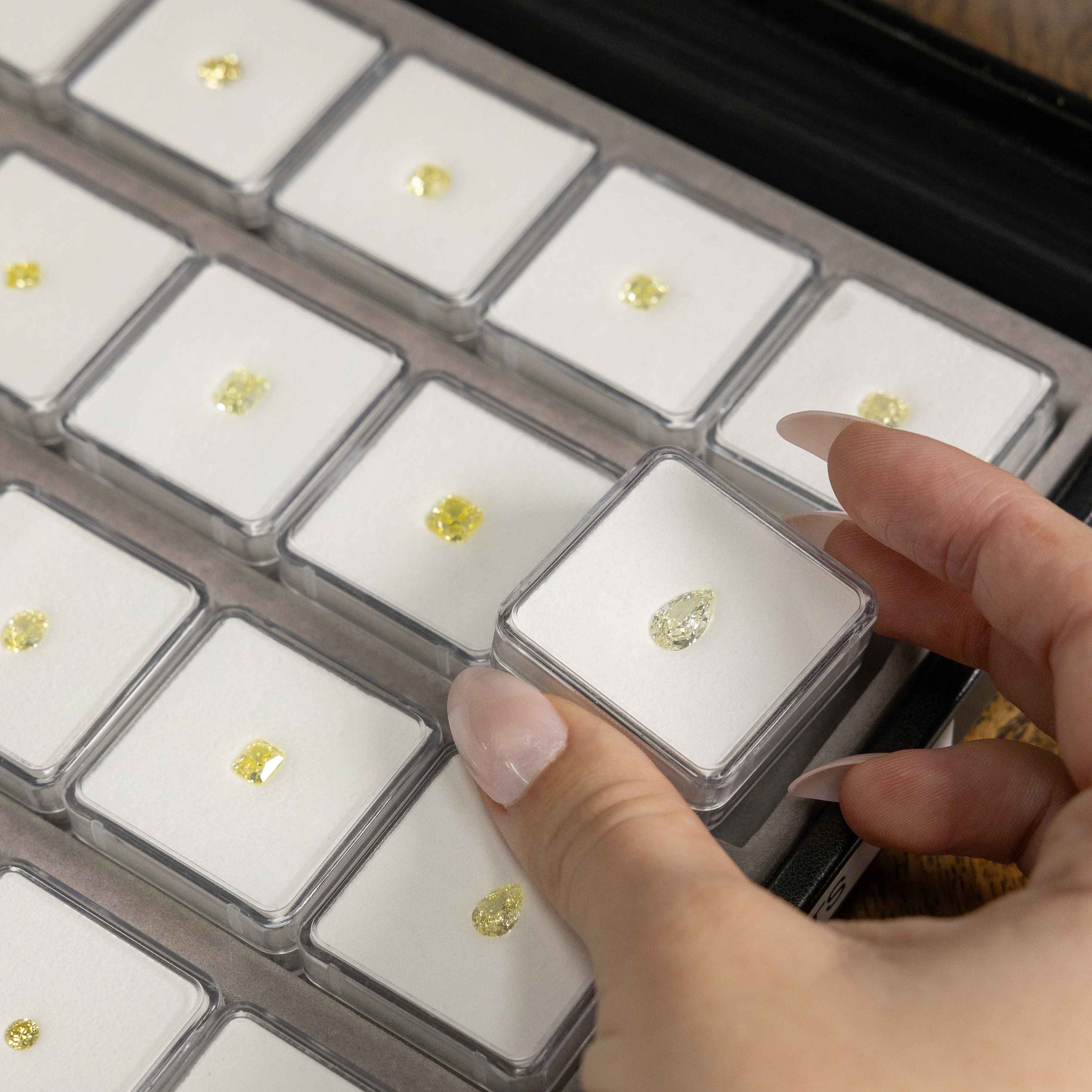
Every Argyle diamond available now — whether a pink, a red, or one of the honeyed champagne tones the mine was equally known for — is coming from existing above-ground stock. There is no new production, no future tender, and no way to replenish what's already been sold, cut, and certified. This is precisely why provenance documentation matters so much in this category: a mine certificate of authenticity isn't a formality, it's the only proof that a stone belongs to a supply that will never grow again.
For collectors, this reframes the decision entirely. The question isn't "will this stone become available again in a different size or colour" — it's "how much of this particular tier of the finite Argyle story is still on the market, and for how long." Champagne diamonds in particular occupy an interesting position: still relatively accessible compared to the vivid pinks, but drawn from the exact same closed Western Australian mine, with the same finite ceiling on supply.
A closed chapter, still being written
Argyle's rehabilitation continues on the ground in the Kimberley, returning the land to its traditional custodians. But its legacy in loose stones and jewellery boxes around the world is still very much alive — and, if the last few years are any indication, still appreciating. Understanding the mine's history isn't just a matter of curiosity for anyone drawn to these stones; it's the clearest possible explanation of why the diamonds themselves have become so much more than a gem category. They're a closed, dated, and irreplaceable piece of Australian mining history. Shop our range of of Argyle Diamonds today link
Read more
If you've spent any time browsing loose sapphires, you've likely come across the word "heated" somewhere in the description — and wondered whether that's something to worry about. It isn't, and und...
Every gemstone has a story, but few are as unexpected as the Malaya garnet's. Discovered in the 1960s and '70s in Tanzania and Kenya's Umba River Valley, these warm, glowing stones were originally ...