

Heat Treatment in Gemstones: What It Is and Why It Matters
Heat Treatment in Gemstones: What It Is and Why It Matters
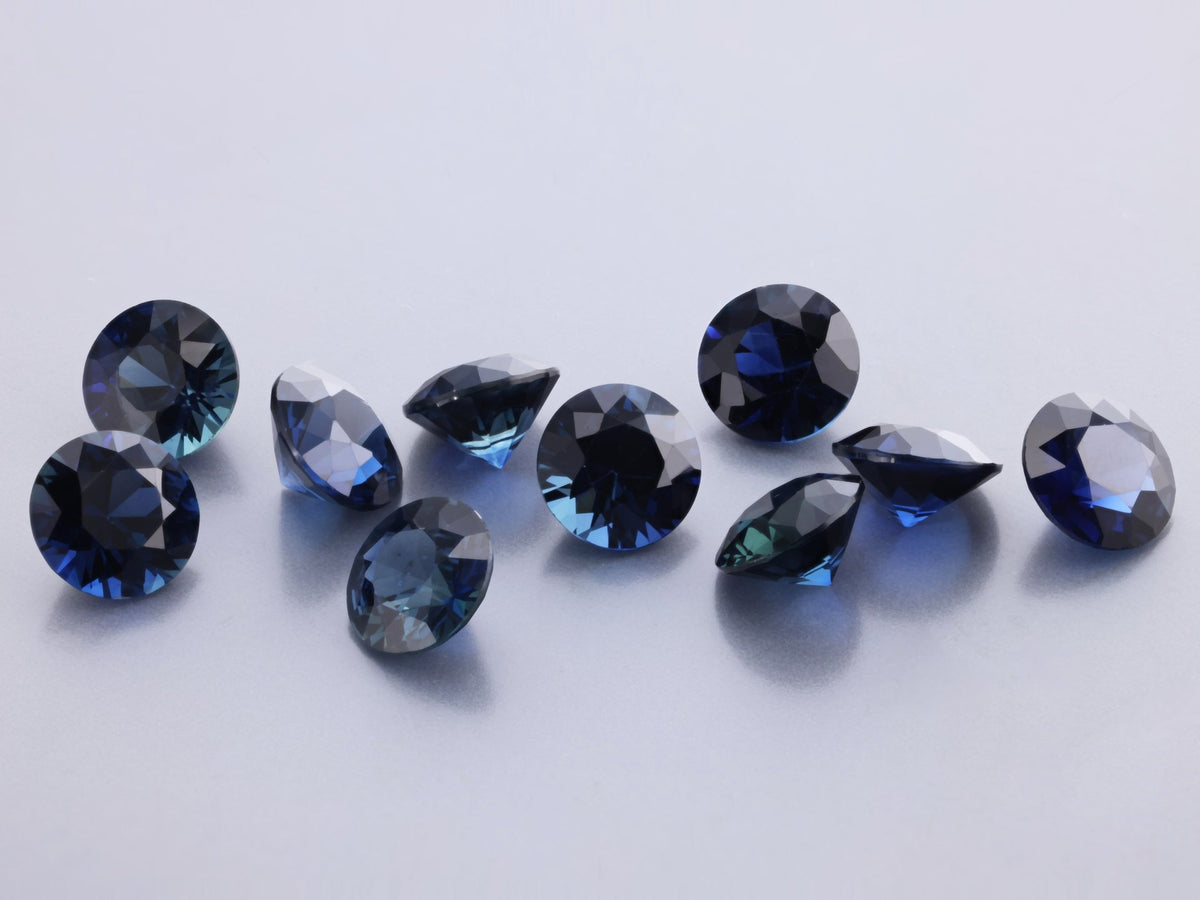
If you've spent any time browsing loose sapphires, you've likely come across the word "heated" somewhere in the description — and wondered whether that's something to worry about. It isn't, and understanding why is one of the most useful things you can know before buying a coloured gemstone.
What is heat treatment?
Heat treatment is exactly what it sounds like: a gemstone is heated to a high temperature in a controlled setting, then cooled slowly. For sapphires, this typically means temperatures in the hundreds to well over a thousand degrees Celsius, applied for a set period depending on the stone.
The process doesn't add anything foreign to the stone. It simply encourages a chemical and structural change that would otherwise take enormous spans of geological time to occur naturally — essentially finishing a process the earth already started. Heat can shift or deepen colour, dissolve fine internal inclusions to improve clarity, and even out patchy colour zoning within a single stone.
Why are most sapphires heat treated?
Because gem-quality sapphires with naturally perfect colour and clarity are extremely rare. Left untreated, a lot of sapphire rough would be too pale, too dark, too milky, or too unevenly coloured to be desirable as a gemstone. Heat treatment allows far more of the sapphire that's actually mined to reach its full potential as a wearable, beautiful stone — which is also why heat-treated sapphire is so much more accessible in price than untreated material.
The vast majority of sapphires sold today — by most estimates, well over 90% — are heat treated. It's considered a standard, industry-accepted practice, not a shortcut or a defect.
Does heat treatment reduce a gemstone's value?
Not in the way people often assume. A heat-treated sapphire is still a genuine, natural sapphire — the treatment doesn't make it synthetic or artificial, and it doesn't affect the stone's hardness or how it wears day to day.
What heat treatment does affect is rarity, and rarity affects price. An untreated sapphire of comparable colour and clarity to a heated one will usually carry a meaningful premium — sometimes significant — simply because untreated stones of that quality are so much harder to find. Neither option is objectively "better." It comes down to what you value most: colour-for-price, or the rarity of an untouched, natural-state stone.
Can you tell if a sapphire has been heated just by looking at it?
No — and this is worth knowing if you're comparing stones. To the naked eye, a heated and an unheated sapphire of similar quality look identical. Telling the difference reliably requires gemological examination, usually under magnification, where a trained eye can look for specific indicators like the condition of internal inclusions.
If treatment status matters to your decision, the only reliable way to know for certain is a lab report from a recognised gemological laboratory. A report stating no evidence of heating is the standard confirmation that a stone is untreated.
Are there other treatments besides heat?
Yes — heat is the most common treatment for sapphire, but not the only one used across the gemstone world. Depending on the stone, you might also come across:
- Diffusion treatment — where colour is introduced from the outside in, often alongside heat, to alter a stone's hue
- Irradiation — used on some coloured gems and diamonds to change colour
- Oiling — common in emeralds, where colourless oil fills surface-reaching fractures to improve apparent clarity
- Dyeing — used on porous or included material to add or enhance colour
Reputable dealers should disclose any treatment beyond standard heating, since some of these — oiling in particular — require ongoing care considerations that a buyer should know about.
What about tourmaline, spinel, and garnet — are they treated too?
It varies by gem, which is part of why it's worth asking rather than assuming:
- Spinel is predominantly untreated. Most spinel on the market — including the pink, red, lavender, and blue-grey stones you'll find in our Ceylon collection — reaches the market in its natural state, which is one of the genuine points in its favour for buyers who want untouched colour.
- Tourmaline varies. Many tourmalines, including most chrome tourmaline, are untreated, though some varieties are heated to lighten dark tones.
- Garnet, including Malaya garnet, is rarely treated at all — it's one of the few major gem varieties where untreated is the norm rather than the exception.
- Aquamarine is another stone where heat treatment is the rule rather than the exception. Most aquamarine emerges from the ground with a greenish or yellowish tint, caused by iron within the crystal. Gentle heating removes that tint and shifts the stone toward the pure, cool blue that most buyers associate with aquamarine. As with sapphire, this treatment is permanent, widely accepted throughout the trade, and doesn't affect the stone's durability. Naturally blue aquamarine does exist, but it's a small fraction of what's mined — genuinely untreated aquamarine tends to lean more green or seafoam in tone.
Our approach to treatment disclosure
We believe treatment status is something you're entitled to know, not a detail to be glossed over. Where we know a stone's treatment history, we disclose it. Where certification is available, we make it available to you. If you're ever unsure about a specific stone in our collection, our team is genuinely happy to talk it through before you buy — get in touch any time.
Curious about a specific stone in our current collection? Browse our gemstones or reach out and we'll talk you through it.
Read more
Ask most people to name a coloured gemstone, and they'll reach for the obvious answers — emerald, ruby, sapphire. Ask a gemmologist the same question, and there's a good chance tourmaline comes up ...

For thirty-seven years, a remote stretch of the East Kimberley in Western Australia produced more coloured diamonds than anywhere else on earth. Then, on 3 November 2020, the last load of ore came ...